The Soccer Field as Home
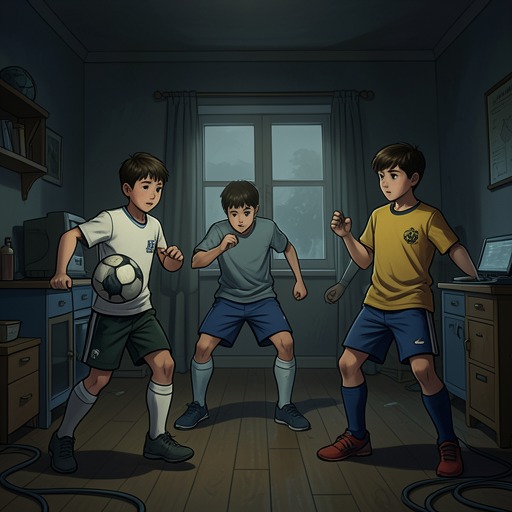
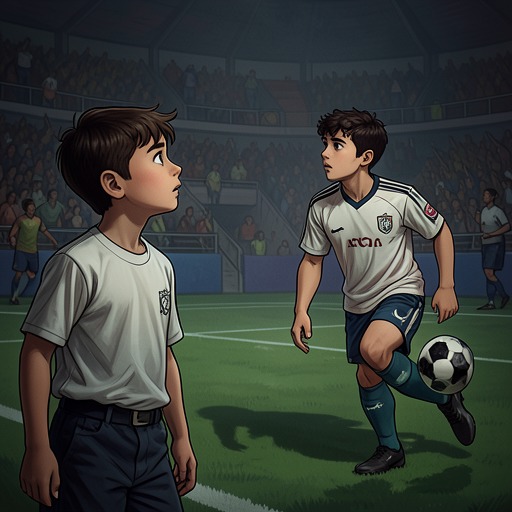
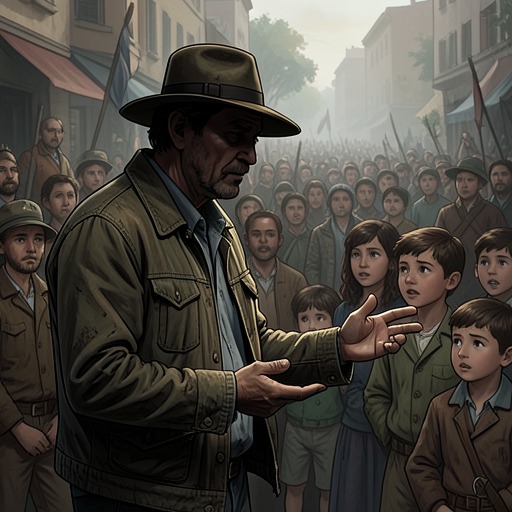
Kevin the Star StrikerThe Soccer Field as Home is more than a place where the Wild Soccer Bunch plays: it is the material center of the boys’ friendship and the territory through which the story defines belonging, exclusion, courage, and justice. The field is threatened by the Unbeatables’ takeover, defended through a formal soccer challenge, and finally reclaimed through a comeback that proves the Wild Bunch’s right to exist as a team. Yet the victory also shows that winning a game does not automatically restore a fair social order; the field becomes truly theirs only when solidarity and Sox’s intervention force Mickey to retreat.
A Frozen Home
The field lies in the Wild Bunch’s neighborhood on the north side of Chicago. The year the boys become a team, Winter lasts far into April: the ground is frozen solid and covered in snow, the wind blows fiercely, and the city’s reputation as The Windy City becomes part of the setting’s physical harshness. Against that cold, the field represents the life the boys are waiting for during Spring break: two weeks without school or homework, spent running there after breakfast and remaining until sunset, with soccer and lemonade from Larry’s lemonade stand filling the day. Its value is therefore not merely athletic. The field promises freedom from adult schedules, a place for play, and a daily structure built by the boys themselves.
The field also gives the Wild Soccer Bunch a common identity before the team is fully organized. Kevin describes the group as dangerous and wild rather than merely a collection of eleven friends and a cute dog. Danny’s speed, Tyler’s tactical intelligence and persistence, Kyle’s instinctive goalkeeping, and Larry’s coaching all become meaningful through repeated activity in this shared space. The field turns individual abilities into a collective machine: Tyler is its brains and heart, while Danny is the forward Kevin relies on. In this sense, home is produced through use. The boys belong to the field because they repeatedly occupy it, train on it, depend on one another there, and imagine their future around it.
Seizure and Exclusion
The field’s meaning changes when the Unbeatables arrive. Roger reaches the others too late and reports that the soccer field has been taken. Mickey the Bulldozer then appears with his larger, stronger, and more intimidating followers, presenting himself as the dominant figure of the neighborhood. His physical presence and the group surrounding him convert the field from an open place of play into a controlled territory. The Unbeatables’ authority rests not on skill or an agreed competition but on intimidation, numbers, and the threat of violence.
Mickey declares that the field belongs to the Unbeatables and that only they may play there. The statement is an act of naming and exclusion: by pronouncing ownership, he attempts to erase the Wild Bunch’s prior relationship with the space. The boys are told that they have no business there, while Kong’s knuckle-cracking gesture makes the implied punishment unmistakable. The field is thus occupied through a distorted version of social order. Mickey treats force as a rule-making power, and the Unbeatables’ presence makes ordinary play impossible.
The Wild Bunch nevertheless refuses to leave. Kevin insists that the field is theirs and that they will not surrender it simply because tough-talking opponents have appeared. His response does not deny the danger; the boys are frightened, and Roger has every reason to be afraid. Their attachment to the field is stronger than a casual preference for one playing area. Leaving would mean accepting the Unbeatables’ definition of who is entitled to occupy the neighborhood’s central shared space.
The Field Becomes a Court of Rules
Kevin transforms the confrontation by proposing a two-week challenge. He gives the Unbeatables two weeks to pretend that the field is theirs, then demands a soccer match. If the Wild Bunch wins, Mickey and his followers must leave and the field will belong to the Wild Bunch permanently; if the Unbeatables win, they may keep it. The challenge converts a raw contest of physical dominance into a contest with conditions, a time limit, an agreed object of judgment, and a consequence tied directly to the field.
The later match reveals how unstable that agreement is. Mickey claims that the challenged team may choose the weapons, and he selects conditions that favor the Unbeatables: the Wild Bunch must play with the sun in their eyes, and the game will continue until one team scores ten goals. He also declares that body contact is allowed after the Grim Reaper knocks Tyler down and then strikes Julian in the eye. These decisions expose the difference between a rule and a weaponized rule. Mickey speaks in the language of fair competition while using his authority to normalize physical harm and manipulate the conditions of play.
Roger introduces a further condition: the losing team must fix Larry’s stand. This rule connects the field to the small business beside it and makes the match responsible for the wider shared environment. The game is no longer only about possession or pride. Victory will determine who must repair something that belongs to the community around the field. The condition gives the contest a practical consequence and opposes Mickey’s selfish claim with a principle of responsibility.
Reclaiming the Space Through Play
The Wild Bunch begins the match under overwhelming pressure. Mickey scores five goals in seven minutes, while the boys lie on the grass injured and demoralized: Julian’s eye is darkened by the blow, Tyler holds his ribs, and Kevin has a badly scraped knee. The field, which should have been a place of freedom, has become a scene where the Unbeatables’ physical power appears to dictate the result. Kyle and Joey can offer only a careful joke before Joey angrily promises that the Unbeatables will not have the last laugh.
The change begins when the Wild Bunch answers intimidation with coordinated play. Their battle cry, “ONE, TWO, THREE WILD!”, gathers them shoulder to shoulder before they spread across the field. Passing replaces isolated force: Kevin passes to Alex, Alex returns to Tyler, Tyler sends the ball toward Danny, Danny plays it back, and Joey becomes part of the movement on the left. The field is reclaimed not by a stronger individual but by the team’s ability to make space for one another inside it.
The comeback develops through specific reversals. Alex scores the first Wild Bunch goal after Kevin’s pass reaches him, and Kevin then scores with his famous “flip over bicycle kick” to make the score seven to two. Rain softens the ground into mud, but the difficult surface favors the Wild Bunch because the team has trained on that kind of field for twelve days. Kevin scores his third goal, Danny his second, and Joey brings the score level at seven to seven. Tyler controls midfield and scores from halfway down the field when a gust of wind carries the ball beyond Octopus’s reach. Diego then forgets his asthma and becomes the Tornado again, helping the Wild Bunch reach nine goals.
The field’s final decisive moment tests whether Kevin can subordinate personal glory to the team. After the Wild Bunch takes the lead, Kevin keeps the ball instead of passing because he wants the tenth goal. Larry removes him and sends Roger onto the field. Kevin protests, fearing that the substitution will cause defeat, but Larry’s decision restores the team’s discipline. Roger’s presence matters not only tactically but relationally: the field becomes a place where trust is repaired through action rather than declared in advance.
Victory, Threat, and Belonging
The Wild Bunch reaches ten goals and wins the match, but Mickey immediately tries to invalidate the result. He says the game was a joke and threatens the boys with the claim that they cannot really think the soccer field is theirs. The threat exposes the limit of a formal contest when the defeated side refuses the conditions it accepted. The boys have won according to the match’s stated terms, yet the field remains vulnerable because Mickey still believes physical power gives him the final authority.
The confrontation changes when Josh and Sox appear. Sox raises his chops and shows his teeth, and Mickey’s confidence falters before he retreats over the wooden fence with the other Unbeatables. The dog’s intervention does not replace the boys’ achievement; it completes it by breaking the immediate threat that the game alone could not remove. Mickey’s withdrawal finally makes the Wild Bunch’s victory materially effective.
Afterward, Sox proudly wags his tail, Roger and Kevin are friends again, and the sun breaks through the dark clouds toward the horizon. These details restore the field’s emotional atmosphere as well as its physical accessibility. The boys have not simply defeated opponents. They have re-established the field as a place where friendship can be repaired, fear can be endured, and collective identity can be enacted. The Soccer Field as Home therefore names an achievement rather than a permanent possession: home is the space the Wild Soccer Bunch makes and remakes by playing together, defending one another, and refusing to let domination define who belongs.